Why So Many Foreigners Who Come to Sendai Just… Never Leave
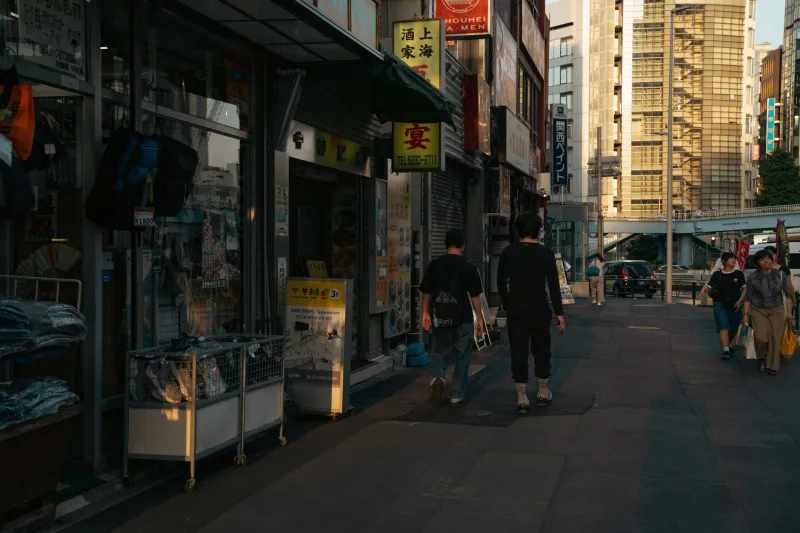
There's a moment that almost every long-term foreign resident in Sendai describes in roughly the same way. You're somewhere unremarkable — a convenience store, maybe, or a neighborhood izakaya — and a local just… talks to you. Not in the stilted, apologetic English that sometimes surfaces in Tokyo. Not the polite but clearly uncomfortable small talk you might get in Kyoto. Just a regular conversation, the kind where nobody's making a big deal out of the fact that you look different or sound different. And somewhere in that moment, you realize: oh, this place is different.
Sendai doesn't get the credit it deserves as one of Japan's most genuinely foreigner-friendly cities. It doesn't have Tokyo's global brand or Osaka's loud hospitality reputation. But ask the expats, digital nomads, and adventurous travelers who've ended up here — really ended up here, as in planted roots, signed leases, enrolled their kids in school — and a remarkably consistent story emerges. Sendai has a rare quality in Japan: it's a city that's been curious about the outside world for a very, very long time.
It Started With a One-Eyed Warlord
Date Masamune, the legendary daimyo who built Sendai into a major regional power in the early 1600s, was not your typical feudal lord. While the Tokugawa shogunate was busy slamming Japan's doors shut to foreign influence, Masamune was quietly sending diplomatic missions to Europe. He dispatched his retainer Hasekura Tsunenaga all the way to Spain and Rome — a voyage that, by the standards of the early 17th century, was genuinely extraordinary. The mission didn't produce the trade deals Masamune hoped for, but it planted something in the city's DNA: a sense that the world beyond Japan's coastline was worth engaging with, not fearing.
That thread of openness didn't disappear. It just wove itself into the culture over the centuries. Today, Sendai has a significant international student population, largely thanks to Tohoku University, one of Japan's most respected research institutions and historically one of its most internationally oriented. The university has been enrolling foreign students since the early 20th century, which means Sendai has spent over a hundred years getting comfortable with people who don't speak Japanese as their first language. That's not nothing. That's generational muscle memory.
The Tokyo Comparison Nobody Talks About Enough
Here's a thing that doesn't get said often enough in travel writing about Japan: Tokyo can be exhausting for foreigners in ways that have nothing to do with jet lag. It's not unfriendly, exactly. It's more that it's so vast, so segmented, so relentlessly optimized for efficiency that genuine human connection can feel weirdly hard to come by. You can spend months in Tokyo and never have a neighbor learn your name.
Sendai is a real city — population close to a million, with actual urban infrastructure and a proper nightlife scene — but it operates at a human scale that Tokyo simply doesn't. Neighborhoods here feel like neighborhoods. The shotengai shopping streets still have actual shopkeepers who remember your face. The bar owners know what you drink. Several long-term American and European residents describe a similar adjustment period: the first few weeks of waiting for the city to feel anonymous, the slow realization that it just… isn't going to.
"I kept expecting it to feel like Tokyo eventually," says one American who moved to Sendai several years ago after a stint teaching English in the capital. "Like I'd hit some invisible wall where the friendliness stopped. It never happened. People here are genuinely interested in you, not just politely tolerating you."
The Language Question (It's More Manageable Than You Think)
Let's be honest: Japan's language barrier is real, and Sendai isn't going to pretend otherwise. If you don't speak Japanese, daily life here will require patience, a translation app, and a willingness to mime things in convenience stores. English signage, while improving, is still spottier than you'd find in major tourist corridors.
But there's a difference between a language barrier and a social barrier, and Sendai's residents seem unusually willing to work around the former without letting it create the latter. Multiple foreign residents point to the same phenomenon: locals here will go noticeably out of their way to help, using gestures, drawings, Google Translate held up like a peace offering, whatever it takes. It's not that everyone speaks English. It's that the discomfort of the communication gap doesn't seem to embarrass or frustrate people the way it sometimes can in other cities.
The expat community itself, while not enormous, is well-connected and genuinely welcoming to newcomers. There are regular meetups, international community events, and a loose but functional informal network of people who've figured out the practical stuff — which wards have the most straightforward residency paperwork, which neighborhoods tend to have more English-comfortable landlords, where to find decent Mexican food when the homesickness hits.
The Unwritten Code
Every city has cultural codes that nobody puts in the guidebook. Sendai's aren't dramatically different from broader Japanese social norms — the baseline courtesies around noise, cleanliness, and not being a burden on your neighbors still apply — but long-term residents describe a local variation that's worth knowing about.
Sendai people tend to be, in the words of one longtime Australian resident, "warm but not pushy." They won't necessarily invite you to dinner the first time they meet you. But they'll remember your name, ask about your family, and quietly keep an eye out for you in ways that accumulate into something that feels, over time, genuinely like community. It's not the effusive, immediate hospitality of, say, a Southern US city. It's slower and more durable.
The other thing worth knowing: Sendai residents have a particular pride in their city that functions as a kind of shared identity. They don't need you to think Sendai is better than Tokyo. They already know it is. That confidence — relaxed, unpretentious, not defensive — tends to translate into an ease around outsiders that more self-conscious cities sometimes lack.
So Why Doesn't Everyone Know About This?
Probably because Sendai doesn't market itself particularly hard to international visitors, and because Japan's tourism infrastructure still funnels most foreign travelers through the Tokyo-Kyoto-Osaka corridor. The city got global attention after the 2011 Tōhoku earthquake and tsunami, but that attention was about tragedy and recovery, not about the everyday texture of life here.
Which is, honestly, a little bit the city's loss and a lot the savvy traveler's gain. The foreigners who've found Sendai tend to be protective of it in the way people are protective of anything genuinely good that hasn't been oversaturated. They'll tell you it's worth the detour from the standard Japan itinerary. They'll tell you to stay longer than you planned.
And then, if you're not careful, you'll end up like them — signing a lease, learning where the good ramen is, nodding at the neighbor who always nods back, wondering why you ever thought you needed to be anywhere else.