Joints Without Nails: The Sendai Woodworkers Keeping a 400-Year-Old Craft Alive
You probably haven't heard of sendai-tansu. Most Americans haven't. Honestly, a lot of Japanese people haven't either, which is exactly the problem — and the opportunity — that a small but determined community of woodworkers in Sendai is trying to fix.
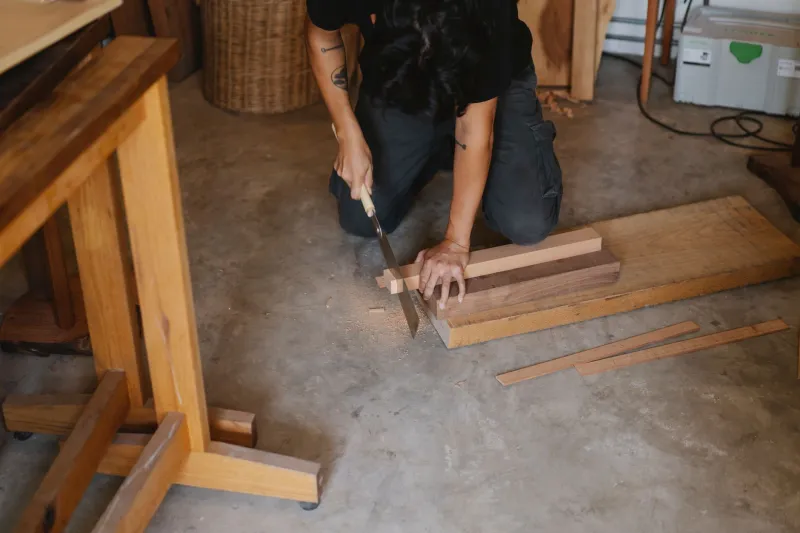
Walk through the right neighborhoods on the city's western side and you'll catch it: the low hum of a hand plane being pulled across a cedar board, the sweet, almost medicinal smell of freshly worked wood drifting out of a sliding door left cracked open. These are the workshops where some of Japan's most technically demanding furniture traditions are still being practiced, largely out of the spotlight, and increasingly by people young enough to have grown up with smartphones.
What Even Is Sendai Tansu?
At its core, tansu just means chest of drawers — storage furniture. But Sendai's version earned a reputation across Japan for a specific combination of qualities: heavy, lacquered zelkova wood, ornate iron hardware forged by local blacksmiths, and joinery so precise that the pieces hold together through humidity, earthquakes, and centuries of use without any mechanical fasteners. The furniture was built for samurai households and merchant families during the Edo period, and it was designed to last not just a lifetime but many generations.
The joinery is the real thing to understand here. Techniques like kigumi — interlocking wood connections that use the material's own geometry to create tension and strength — were refined over hundreds of years. A single drawer might involve a dozen different joint types, each cut by hand to tolerances that would impress a modern machinist. There's no margin for error, and no shortcut that produces the same result.
For most of the 20th century, that level of craftsmanship was slowly losing ground to factory production. Why pay a master woodworker three months' wages for a cabinet when IKEA (or its Japanese equivalent) could ship you something functional in a flat box? The economic logic was brutal, and a lot of workshops closed.
The People Keeping It Going
What's changed recently is harder to pin down — it's a mix of factors that people in Sendai's craft community will describe differently depending on who you ask. Some point to a broader cultural shift in Japan toward valuing monozukuri (the art of making things) as a counterweight to disposable consumer culture. Others credit specific individuals who refused to let their workshops die.
One name that comes up repeatedly is Kenji Sato, a third-generation woodworker in his late 50s who runs a small operation near Aoba Ward with two apprentices and a waiting list that stretches past two years. Sato learned the trade from his father and grandfather, and for a long time he wasn't sure anyone would learn it from him. That changed about a decade ago when he started getting inquiries — first from Japanese design students, then from makers in the US and Europe who had encountered his work at a craft exhibition in Tokyo.
"The international attention was surprising," he's said in interviews. "But it also made people here pay attention again. Sometimes you need someone from outside to tell you that what you have is valuable."
That dynamic — outside recognition sparking local pride — shows up in other Sendai crafts too, but it's particularly visible in the woodworking world. A handful of younger makers, some in their 20s and early 30s, have deliberately apprenticed under older masters rather than going the conventional design-school-to-studio route. They're learning the traditional techniques in full, and then — carefully, thoughtfully — pushing them in new directions.
Old Joints, New Forms
The results are genuinely exciting if you're into this kind of thing, and even if you're not, the objects are hard to look away from. Think a low coffee table with legs connected by a hako-kumi box joint that's visible as a design feature rather than hidden away. Or a wall-mounted shelving unit where the traditional iron hardware has been redesigned with a cleaner profile that reads as contemporary without erasing its historical reference.
Maker Yuki Tanaka, who trained under a Sendai master before opening her own small studio, describes the challenge as "learning the grammar before you try to write your own sentences." Her pieces have been picked up by a design gallery in Portland, Oregon, and she's been contacted by interior designers in New York who found her work through Instagram. She's careful not to let that pull her too far from the workshop, though — the whole point, she says, is the slowness of it. A piece takes as long as it takes.
That's not a marketable pitch in a world that rewards speed and scale, but it's exactly what's attracting a certain kind of buyer and collector. People who are tired of things that fall apart. People who want to know where something came from and who made it.
Why Sendai Specifically?
It's worth asking why this tradition took root here and not somewhere else. Part of the answer is geography — the Miyagi region has long had access to high-quality timber, particularly zelkova and Japanese cedar, which gave local craftsmen excellent raw material to work with. Part of it is the legacy of Date Masamune, the powerful feudal lord who developed Sendai as a castle town in the early 17th century and invested heavily in skilled trades to furnish his estates and administrative buildings. That patronage created a culture of high craft that persisted long after the political structures that supported it disappeared.
Sendai also survived the 20th century with enough of its traditional urban fabric intact — despite bombing in WWII and the 2011 earthquake — that the knowledge could be passed down in an unbroken chain, even if that chain got pretty thin at certain points.
How to See It for Yourself
If you're visiting Sendai and want to actually engage with this world rather than just read about it, a few options exist. The Miyagi Prefectural Museum has examples of historical tansu in its collection. Some workshops offer occasional open days or short workshops — worth checking local event listings or asking at the Sendai tourist information center, since these aren't always advertised in English.
And if you're serious about it, the Tohoku craft fair circuit, which runs through late spring and fall, regularly features woodworkers from this tradition alongside ceramicists, textile makers, and lacquerware artists. It's a good way to see the work in person and, if the timing is right, actually talk to the people making it.
Bring cash. Bring patience. And maybe recalibrate your expectations around what furniture is supposed to cost when someone has spent three months making it by hand.
Some things are worth the wait.