Thread by Thread: The Quiet Revolution Happening in Sendai's Weaving Workshops
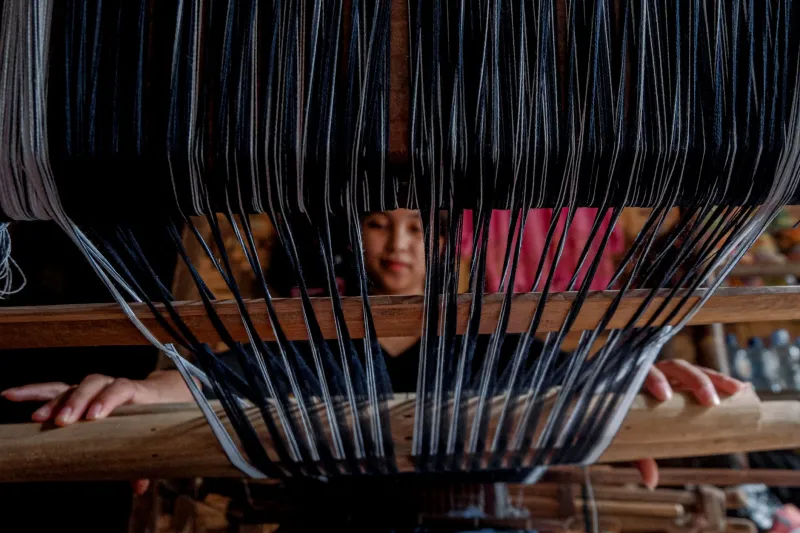
Most people who land in Sendai come for the beef tongue, the Tanabata lanterns, or maybe a pilgrimage to Date Masamune's old stomping grounds. Textiles? That's usually Kyoto territory — all gilded nishiki brocade and tourist-facing kimono shops. But spend a little time poking around the quieter corners of this city, and you'll find something that stops you cold: workshops humming with looms, walls draped in fabric that looks like it came from another century, and makers who will talk your ear off about the difference between a balanced twill and a supplementary weft if you give them half a chance.
Sendai's textile tradition doesn't shout. It never has. But it's been here a long time, and right now, it's having a moment that the rest of the world is just starting to notice.
A Tradition That Outlasted the Bombs
Sendai was heavily bombed during World War II, and like so much of the city's cultural heritage, its textile traditions took a serious hit. The postwar rebuild prioritized industry and infrastructure, and handcraft weaving got pushed to the margins. But it didn't disappear.
A handful of families kept going — maintaining looms, passing down techniques, quietly producing fabric in neighborhoods that had no particular reason to care about them. The tradition that survived is rooted in tōhoku-region weaving styles, which tend toward earthier palettes and sturdier constructions than the more famous silk work of central Japan. Think deep indigos, muted greens, the kind of browns that look like they were pulled directly from the cedar forests outside the city.
Those regional characteristics — once considered less prestigious than Kyoto's flashier output — are exactly what's attracting outside attention now.
Inside the Workshops
If you want to find the weavers, you have to look for them. There are no big signs, no tourist-office brochures with maps. You follow a tip from a coffee shop owner, or you ask at a local craft market, and eventually you end up in front of a narrow building where the sound of a loom is the only advertisement.
One weaver — a woman in her late fifties who learned the craft from her mother and grandmother — works out of a studio that doubles as her living room. Her loom is enormous, an old wooden beast that takes up most of the floor space. She's been working on a single bolt of fabric for three weeks. It's a deep rust color with a subtle geometric pattern woven in, almost invisible until the light hits it at the right angle.
"People think weaving is slow because the weaver is slow," she says, not looking up from the shuttle. "Weaving is slow because the fabric requires it."
That philosophy — patience as craft, not inconvenience — runs through every workshop you visit. These aren't people trying to scale up or optimize. They're making things that take as long as they take, and the results carry that intentionality in every thread.
Another maker, a younger woman in her early thirties who studied textile design in Tokyo before coming back to Sendai, is experimenting with blending traditional regional techniques with contemporary color palettes. Her work looks almost Scandinavian at first glance — clean lines, restrained tones — until you realize the structure underneath is rooted in weaving methods that are several hundred years old.
"I'm not trying to preserve the past exactly as it was," she explains. "I'm trying to keep the knowledge alive by making it useful for now."
Why International Designers Are Paying Attention
Here's the thing about handwoven Japanese textiles: they're almost impossible to replicate at scale. The irregularities that come from human hands at a loom — the slight variations in tension, the micro-differences in thread spacing — are exactly what gives the fabric its character. Fashion designers who've spent years fighting against the sameness of mass-produced textiles are increasingly hungry for material that has a story baked into it.
Sendai's weavers have started receiving inquiries from designers in Europe and the US who found their work through Instagram, craft fairs, or word of mouth in the fashion industry's surprisingly small world. A few have done small collaborations — limited runs of fabric used in capsule collections, or custom commissions for designers who want something genuinely one-of-a-kind.
None of this has turned into big money. The weavers are still small operations, still working out of those cramped studios, still producing fabric at the pace the fabric demands. But there's a growing recognition in certain design circles that what's coming out of Sendai is serious — technically sophisticated, regionally specific, and carrying an aesthetic sensibility that you can't buy from a supplier catalog.
What You Can Actually Do Here
If you're visiting Sendai and you want to engage with this world, there are a few real options. Some weavers offer workshop sessions where you can try your hand at a loom — don't expect to produce anything wearable, but you'll come away with a completely different understanding of what fabric actually is. A few sell directly from their studios, which is worth doing if you want to bring home something that will outlast any souvenir shop find by about a century.
The Sendai craft market scene — which pops up at various locations throughout the year — is also a good place to encounter textile work alongside ceramics, woodwork, and other local crafts. It's an easy, low-pressure way to see what's being made and talk to the people making it.
And honestly? Sometimes the best thing to do is just ask. Sendai has a reputation among travelers for being a genuinely friendly city, and the makers here are not precious about their work in the way that can make craft tourism feel intimidating. If you show up curious and respectful, people tend to talk.
The Bigger Picture
There's a version of this story that's sad — a dying tradition, a handful of holdouts, the inevitable fade. But that's not quite what's happening here. Younger makers are entering the field. International interest is creating new markets. And the specific character of Sendai's textile heritage — rooted in Tōhoku's landscape and history, shaped by the city's particular experience of loss and rebuilding — gives it something that more famous textile centers can't offer: a story that's still being written.
Kyoto will always have its silk. But Sendai has something quieter and maybe more honest — fabric made by people who kept going when there was no particular reason to, and who are now finding out that the world was just waiting to catch up.