Built to Heal: How Sendai Turned Its Darkest Chapters Into Living Architecture
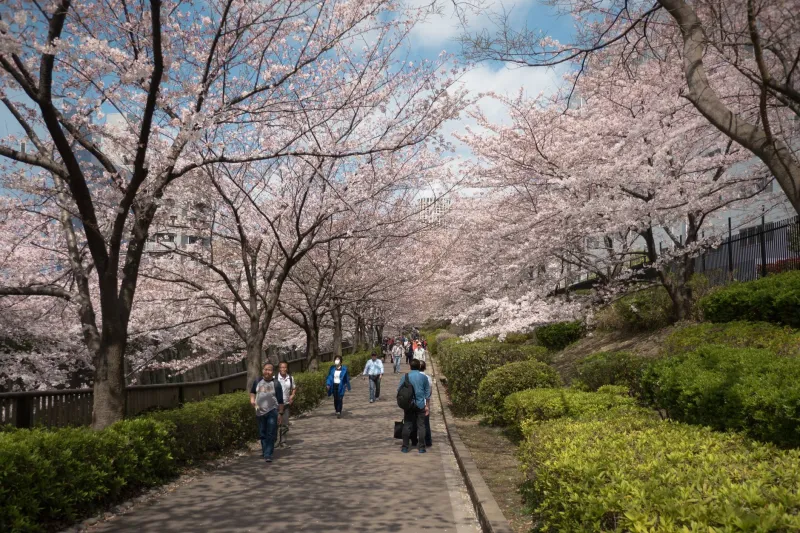
There's a particular kind of quiet you feel in Sendai that's hard to put your finger on at first. It's not the silence of a sleepy town or the polished hush of a museum district. It's something more deliberate — like the city itself exhaled at some point and decided, consciously, to breathe slower. Walk through Jozenji Street on a Tuesday afternoon, or sit by the edge of Nishi Park as the zelkova trees filter the light into something almost golden, and you start to understand: this place was designed to make you feel okay.
That didn't happen by accident. It happened because Sendai has been through it — twice, in living memory — and the people who rebuilt it both times made a choice that not every city gets to make. They decided that the bones of the city would carry the weight of its grief, so that the people living in it wouldn't have to carry it alone.
A City That Had to Start Over
Most Americans know Sendai, if they know it at all, as the closest major city to the epicenter of the 2011 Tōhoku earthquake and tsunami. And that's a fair starting point — March 11, 2011 was a catastrophe on a scale that's genuinely hard to absorb. Over 10,000 lives lost in Miyagi Prefecture alone. Entire coastal neighborhoods erased. The kind of destruction that rewires a community's sense of safety and permanence.
But here's what a lot of people don't know: Sendai had already done this once before. In July 1945, American firebombing leveled roughly 70 percent of the city in a single night. Tens of thousands of residents were left homeless. The urban fabric that had grown over centuries was simply gone.
Two catastrophes. Two complete rebuilds. And somehow, each reconstruction planted something deeper than concrete and steel.
The Keyaki Boulevard Decision
After the 1945 bombings, the city planners of Sendai could have gone the practical route — grid streets, dense housing, get people sheltered as fast as possible. Instead, they made a choice that seems almost radical in retrospect: they prioritized greenery.
The famous zelkova-lined boulevards — keyaki namiki — that define Sendai's downtown weren't a postwar luxury. They were a postwar priority. City leaders argued, and eventually won the argument, that people who had just watched their city burn needed to see things growing. The trees weren't decoration. They were a statement: we are still here, and so is the living world.
Today, those same boulevards are part of what gives Sendai its nickname — Mori no Miyako, the City of Trees. But if you understand where that greenery came from, the name hits differently. It's not just a tourism slogan. It's a trauma response that worked.
After 2011: Building With Intention
The 2011 reconstruction brought a new generation of urban designers face to face with the same fundamental question: what does a city owe its people when the ground they trusted has failed them?
In the coastal areas hit hardest by the tsunami, the response was a mix of practical engineering — sea walls, elevated roads, relocated neighborhoods — and something harder to quantify. Community gathering spaces were woven into the new layouts with unusual care. Public plazas were positioned not just for foot traffic, but for lingering. Benches face each other. Sightlines open toward the water rather than away from it, a deliberate choice to help residents reclaim a relationship with the sea rather than simply fear it.
Inside the city proper, the response to 2011 was more subtle but equally intentional. Sendai's existing parks and open spaces became emergency hubs during the disaster, and afterward, there was a widespread recognition that those spaces had functioned as more than just parks — they had been the places where people found each other, shared information, and simply existed together when everything else felt like it was falling apart. The city took that seriously. Investment in public green space accelerated. Community gardens multiplied. The logic was simple and human: if we know these spaces save people in a crisis, why wouldn't we make more of them?
The Emotional Logic of Public Space
Spend a few days in Sendai and you'll notice something that doesn't quite compute if you're used to American cities. People use the public spaces here. Not just for jogging or dog-walking, but for actual sitting, gathering, existing without a particular agenda. Families spread out on the grass in Nishi Park on weekday afternoons. Old men play shogi under the trees along Jozenji Street. Teenagers cluster around the fountains near Sendai Station not because there's anything specific to do there, but because the space invites it.
This isn't cultural magic — or at least, it's not only that. It's the result of spaces that were designed with human behavior in mind. Wide sidewalks that don't rush you. Benches positioned to encourage conversation rather than solitary waiting. Greenery at eye level, not just overhead. Small details that add up to a place that communicates, at a frequency just below conscious thought: you are welcome here, and you can slow down.
For American visitors used to cities that feel like they were designed for cars first and people second, Sendai's public spaces can feel almost disorienting in the best way. Like the city is being generous with you.
What a Rebuilt City Teaches
There's a concept in Japanese culture — mono no aware — that's often translated as an appreciation for the transience of things, a bittersweet awareness that nothing lasts. Sendai, more than most places, has earned a deep fluency in that feeling. Its history is a cycle of loss and renewal, and the city wears that history openly rather than burying it.
The memorials to 2011 are present but not overwhelming. The rebuilt neighborhoods along the coast feel forward-looking, not frozen in grief. And the downtown, with its canopy of zelkova trees and its generous plazas, feels like a place that has made peace with its own fragility — and decided to be beautiful anyway.
For visitors, that's an experience that's genuinely hard to find. Most tourist cities sell you a version of themselves that has been smoothed and packaged. Sendai offers something rarer: a city that has been through something real, processed it in public, and built the evidence of that processing into its streets.
Walk slowly enough, and you'll feel it.