What If Your City Grew Like a Forest Instead of a Strip Mall? Sendai Has Answers
Somewhere between Detroit's hollow downtown blocks and San Francisco's displacement crisis, American city planners are running out of easy answers. Revitalize a neighborhood and watch the rents spike. Preserve history and watch the infrastructure crumble. It's a brutal either-or that feels increasingly inevitable — until you spend some time looking at how Sendai, Japan has been quietly threading that needle for decades.
Sendai doesn't make a lot of noise about what it's doing. That's kind of the point. But the results — a city that absorbed catastrophic earthquake damage, rebuilt without erasing itself, and maintained genuine livability across income levels — are hard to ignore if you're in the business of thinking about what cities can be.
The City That Keeps Its Roots
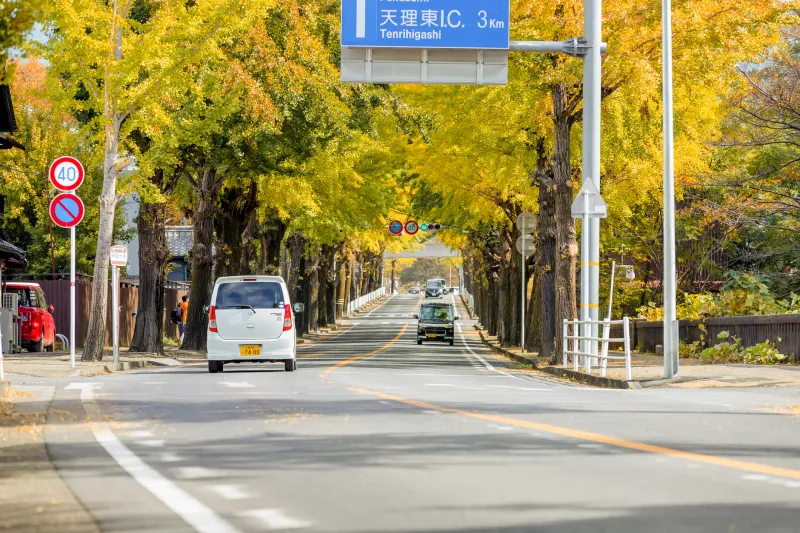
Sendai earned the nickname "Mori no Miyako" — the City of Trees — long before green urbanism became a buzzword in American planning circles. The zelkova-lined boulevards that define the city's main arteries aren't decorative afterthoughts. They're structural. They inform drainage, shade pedestrian corridors, regulate street-level temperature, and — maybe most importantly — give residents a continuous, sensory connection to the city's longer history.
That last part matters more than planners often admit. One of the core complaints about American urban renewal projects, from Baltimore's Inner Harbor redevelopment to the ongoing saga of Detroit's downtown revival, is that they feel imported. Dropped in from somewhere else. The architecture doesn't remember anything. The new coffee shops and co-working spaces have no relationship to what was there before.
Sendai's approach is almost the opposite. When the city rebuilt after the 2011 Tōhoku earthquake and tsunami — one of the most destructive natural disasters in modern history — planners made a deliberate choice to anchor reconstruction in community memory rather than developer convenience. Neighborhoods weren't handed over to outside investment firms looking to maximize square footage. Residents were pulled into the process early and often, their knowledge of what a place had meant treated as infrastructure in its own right.
"What struck me when I visited in 2019 was how the rebuilt sections didn't feel like they were trying to forget," says Marcus Webb, an urban planning consultant based in Pittsburgh who has studied post-disaster reconstruction models across Asia. "There's a coherence to the built environment that you don't get when you let the market fully drive the rebuild. The new parts feel like they belong to the same conversation as the older ones."
Green Corridors as Community Infrastructure
Here's something American cities keep getting wrong about green space: they treat it like a amenity. A reward for density. Something you put in after the real planning is done.
Sendai treats it as load-bearing.
The city's network of green corridors — running from the western mountain foothills down through residential neighborhoods toward the coast — isn't just pretty. It functions as flood mitigation, heat island reduction, pedestrian connectivity, and psychological infrastructure all at once. After 2011, some of these corridors were redesigned as elevated parks and memorial spaces along the coastline, transforming zones of devastation into places that acknowledge grief while still serving daily life.
Compare that to how American cities typically handle waterfront redevelopment. The default move is luxury condos and retail, with a narrow ribbon of public access tacked on as a concession. The community that lived near that waterfront before? Often priced out within a decade.
Sendai's coastal rebuilding included deliberate restrictions on residential construction in the most vulnerable zones — a decision that was politically painful but ultimately protected lower-income residents from being pushed into the areas with the highest flood risk, which is exactly the inverse of what happens in most American coastal cities.
Density Without Displacement
This is the part that makes American planners genuinely uncomfortable, because it implies the problem isn't just design — it's who gets to make decisions.
Sendai's population has faced its own pressures. Japan's demographic decline hits regional cities hard, and Sendai is no exception. But the city's response to shrinking population hasn't been to court outside capital at any cost. Instead, there's been a sustained investment in making the city work better for the people already there — improving transit connectivity to surrounding towns, supporting small-scale manufacturing and craft industries (more on that in basically every other article on this site), and maintaining neighborhood commercial corridors that serve actual residents rather than weekend tourists.
The contrast with American shrinking cities is stark. When a Rust Belt city loses population, the typical playbook involves attracting anchor institutions, offering major tax incentives to large developers, and hoping the resulting activity trickles down. Sendai's playbook looks more like: figure out what's already working, protect it, and build outward from there.
"There's a humility to it," says Dr. Keiko Tanaka, a researcher at Tohoku University who studies community-based urban planning. "The assumption isn't that the city needs to be remade from the outside. The assumption is that the community has knowledge worth preserving, and the planner's job is to work with that knowledge rather than override it."
What Americans Could Actually Borrow
Let's be honest: American cities can't just copy-paste Sendai's model. Different legal structures, different land ownership patterns, different political cultures. The specifics don't transfer cleanly.
But the underlying logic? That's worth sitting with.
The idea that green infrastructure should be designed in from the start rather than squeezed in afterward. That community memory is a planning resource, not a sentimental obstacle. That displacement isn't an unavoidable side effect of renewal — it's a choice, and a different set of choices is possible. That a city can absorb disaster and come back more itself rather than less.
Some American planners are starting to pick up on this. Cities like Richmond, Virginia and Chattanooga, Tennessee have experimented with community land trusts and participatory planning processes that echo some of Sendai's principles. The results are uneven, but the direction is promising.
What Sendai offers isn't a blueprint. It's more like proof of concept. Evidence that a city can grow thoughtfully, absorb trauma with grace, and still feel genuinely lived-in rather than staged for someone else's consumption.
Come See It for Yourself
If you've never walked Jozenji Street during the jazz festival, or wandered the rebuilt coastal memorial parks at dusk, or just stood under the zelkova canopy on a warm September afternoon and watched the city move around you — you're missing the thing that makes all of this abstract planning talk land.
Sendai isn't a theory. It's a place where real people figured out, mostly through hard experience, how to hold onto what mattered while building what was needed. That's not nothing. For a lot of American cities right now, it might be exactly everything.