Quiet on Purpose: How Sendai's Everyday Rhythms Are Saving Burned-Out Americans
There's a moment that almost every American expat in Sendai describes, and they all describe it a little differently but with the same bewildered look in their eyes. It usually happens within the first week. They're standing somewhere ordinary — a covered shopping arcade, a neighborhood side street, maybe waiting for a crosswalk signal — and they realize they've been standing there for several minutes without checking their phone. Without being jostled. Without ambient noise drilling into their skull. And they think: what is this feeling?
The feeling, it turns out, is something close to calm. Which sounds almost embarrassingly simple. But if you've spent years living inside the American attention economy — the push notifications, the highway billboards, the restaurants that pipe in music loud enough to make conversation a competitive sport — simple calm starts to feel like a radical act.
Sendai, the largest city in the Tohoku region of northern Japan, doesn't market itself as a wellness destination. It doesn't have a brand campaign built around serenity. It's a real city of about a million people, with traffic and convenience stores and the full infrastructure of modern Japanese urban life. But something about the way it's arranged — physically, socially, culturally — produces a very different daily experience than what most Americans are used to. And word is getting out.
The Design of a Breathing City
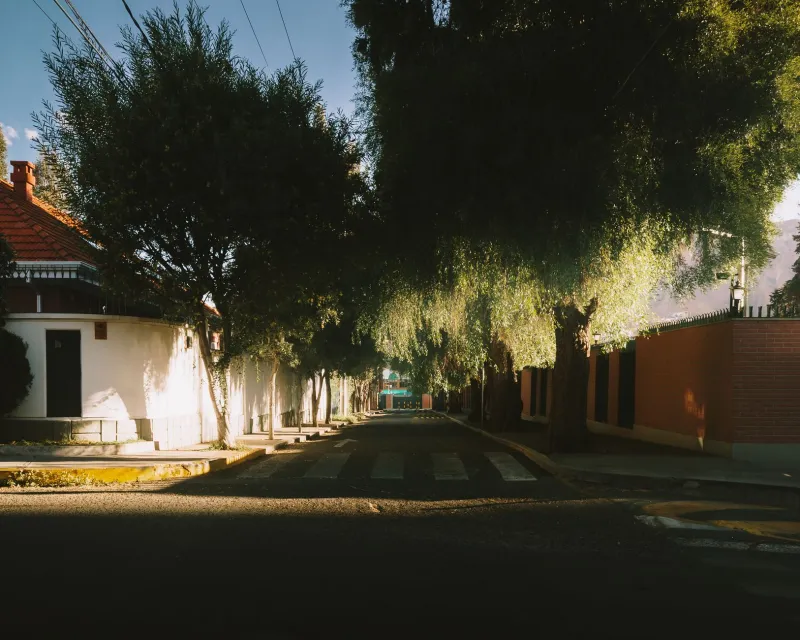
Walk through almost any Sendai neighborhood on a weekday morning and you'll notice the trees first. The city's main boulevard, Jozenji-dori, is famous for its double row of zelkova trees that form a canopy over the median. But it's not just the showpiece streets. Greenery threads through residential blocks in ways that feel intentional rather than decorative. There's a sense that the city was planned with lungs in mind.
Urban planners and residents alike will tell you this isn't accidental. Sendai's nickname — Mori no Miyako, or City of Trees — comes from a deliberate aesthetic philosophy dating back to the feudal lord Date Masamune, who reportedly ordered trees planted along the city's major roads. That tradition has never really stopped. The result is a city that, even in its denser commercial zones, doesn't feel like it's closing in on you.
Then there's the noise question. Or rather, the relative absence of it. Japanese cities in general tend to be quieter than their American counterparts in specific ways — public transit is hushed, restaurants rarely blast music, and there's a broadly shared social norm around not making yourself a disturbance to others. Sendai takes that baseline and adds the particular calm of a mid-size northern city that isn't trying to compete with Tokyo for cultural dominance. It's not sleepy. It's just... unhurried.
What People Are Running From
Ashley, a former marketing director from Austin who relocated to Sendai three years ago, puts it plainly: "I didn't realize how much of my mental energy was going toward filtering out noise until I didn't have to do it anymore."
She'd burned out in her early thirties in the way that's become almost a generational cliché — constant connectivity, a job that colonized her evenings and weekends, a city that never dimmed. She came to Sendai initially for a teaching position and stayed because something shifted in her that she didn't want to lose.
"Back in Austin, even my downtime had an agenda," she says. "Brunch had a two-hour wait. The hiking trail had a parking situation. Everything required logistics. Here, I can walk to a temple that's been standing for centuries and there might be two other people there. It recalibrated something in my brain."
That recalibration story comes up again and again. Marcus, who left a software job in Seattle and has been in Sendai for two years, describes his first month as disorienting in the best way. "I kept waiting for the other shoe to drop. Like, where's the chaos? Where's the thing I have to deal with?" He laughs. "It just... wasn't there. And that forced me to sit with myself in a way I'd been avoiding for probably a decade."
The Social Temperature
It's not just the physical environment. The social culture in Sendai plays a role that's harder to quantify but just as real.
Japanese social norms around public behavior — the quiet on trains, the patience in lines, the general ethic of not imposing yourself on others — create a kind of collective agreement that reduces friction in daily life. But Tohoku, and Sendai in particular, has a reputation even within Japan for a certain warmth beneath that reserved exterior. Locals call it Zuuzu-ben, the regional dialect that softens consonants and gives conversation a gentler texture. People here are described, by both Japanese visitors and foreign residents, as genuinely friendly once you get past the initial reserve.
For Americans used to a culture that performs friendliness loudly but often delivers it shallowly, this inversion takes some getting used to. "At home, everyone's so aggressively nice," says Priya, a former journalist from Chicago now teaching English in Sendai's Aoba ward. "Here, people are quieter upfront, but when they do connect with you, it's real. It's not a transaction."
That distinction — connection without performance — seems to matter enormously to people who arrived exhausted by the social performance demands of American professional life.
Finding Yourself in the Gaps
There's a concept in Japanese aesthetics called ma — often translated as negative space, or the meaningful pause between things. It's the silence between musical notes, the empty room that makes the occupied room feel right. Sendai seems to embody ma on a city-wide scale.
The gaps are where things happen here. The fifteen-minute walk through a residential neighborhood that turns into a conversation with an elderly man tending his garden. The afternoon at a small ramen counter where the cook takes visible pride in every bowl and the only sound is the simmer of broth. The early morning at Zuihoden, the mausoleum of Date Masamune, when the cedar trees are wrapped in mist and you could be standing in any century.
These aren't experiences you schedule. They're what happens when your day isn't packed so tightly that there's no room for them.
"I started writing again," Ashley says, almost as an aside. "I hadn't written anything for myself in years. I didn't think I had anything to say. Turns out I just hadn't had any quiet to hear myself in."
Not an Escape. A Reset.
It would be easy to romanticize all of this — to package Sendai as a retreat from the modern world, a place to unplug and find your soul. But that's not quite what the people who live here are describing. Sendai is a functioning, contemporary city. There are deadlines and commutes and the full texture of ordinary life.
What's different is the ratio. The ratio of stimulation to stillness. Of obligation to open time. Of noise to quiet. Sendai doesn't eliminate the hard parts of being alive, but it seems to stop actively amplifying them.
For Americans arriving with their nervous systems running at redline, that ratio adjustment can feel like coming up for air. Not escape. Something more useful than that.
A reset. And maybe, if you let it, a reintroduction to yourself.