Blueprint for a Better City: What Sendai's Rebuilt Streets Can Teach the Rest of the World
Most cities wear their scars quietly. You have to dig into the history books to find out which block burned down in which decade, or which district got bulldozed to make way for a freeway that nobody really wanted. Sendai is different. This city has been leveled — not once, but twice in living memory — and the way it chose to rebuild each time says something genuinely remarkable about what a city can become when it stops just replacing what was lost and starts imagining something better.
If you've ever walked through Sendai's Aoba Ward on a clear afternoon, weaving between zelkova-lined boulevards and low-rise blocks that somehow feel both tidy and alive, you might have sensed that something was a little different here. It doesn't scream "planned city" the way a place like Brasília does. It doesn't feel sterile or imposed. It just feels... right. That's not an accident. It's the result of decades of intentional, sometimes painful, and occasionally visionary urban decision-making.
From Rubble to Blueprint: The WWII Reset
The first major reckoning came in 1945. American air raids in July of that year wiped out a significant portion of the city — estimates suggest around 30% of Sendai's urban core was destroyed. The timing, grim as it was, handed city planners a rare and terrible gift: a blank canvas.
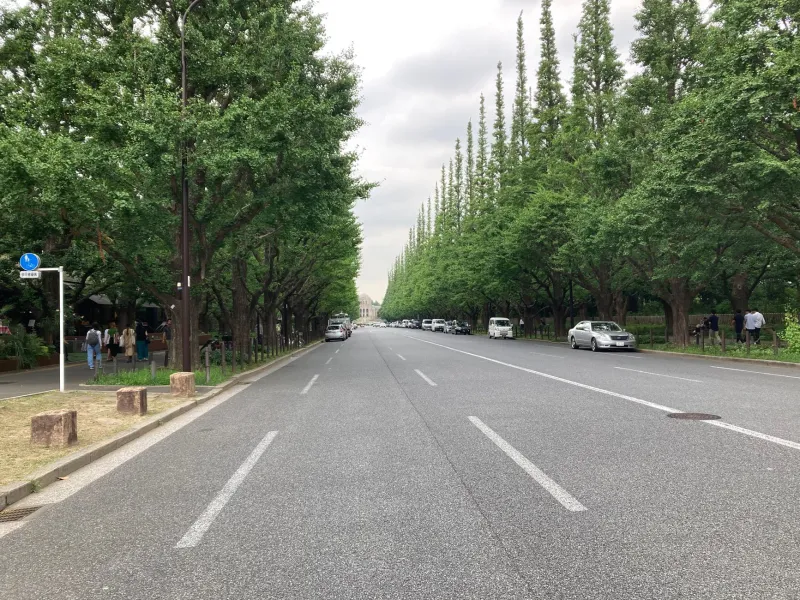
Under the postwar reconstruction framework that the Japanese government pushed nationwide, Sendai's planners widened streets, created firebreaks, and built in generous setbacks that would have been politically impossible to achieve in a city that hadn't been bombed flat. The wide boulevards you see today — particularly along Jozenji-dori, with its double rows of trees and space for pedestrians that feels almost Parisian — trace their origins directly to those postwar decisions.
Jozenji-dori is worth pausing on, because it's the kind of street that American urban designers write envious essays about. It's about 50 meters wide, shaded by mature zelkova trees, and lined with a mix of cafes, boutiques, and cultural spaces. Cars have room, but they don't dominate. On weekends, sections of it close entirely to traffic. It hosts the Jazz Festival every September, turning a city thoroughfare into what feels like a communal living room. This didn't happen by accident — it happened because someone in 1946 drew a line on a map and said: make this wide enough that we never have to fight over it again.
2011 and the Second Reckoning
Then came March 11, 2011. The Tōhoku earthquake and the tsunami that followed it hit Sendai's coastal districts with devastating force. The Wakabayashi and Miyagino wards, closer to the sea, were obliterated. Thousands of people lost their lives. Entire communities simply ceased to exist.
What happened next is where things get genuinely interesting from an urban planning perspective. Rather than rushing to rebuild in place — which is the default, politically expedient response in most countries — Sendai and the broader Miyagi Prefecture made a series of hard, controversial, and ultimately forward-looking calls. Large swaths of the tsunami-impact zone were rezoned. Residents were relocated to higher ground. Coastal areas were redesigned with green buffer zones, elevated parks, and seawall infrastructure that doubled as public space.
Think about how rare that is. In the US, after Hurricane Katrina, the political pressure to rebuild New Orleans' most flood-vulnerable neighborhoods exactly as they were was enormous — and largely won out, leaving many of the same communities exposed to the same risks. Sendai took a different path. It wasn't painless. Many displaced residents were angry, and rightly so. But the result, more than a decade later, is a coastline that has been fundamentally reimagined rather than simply patched.
Kokubuncho and the Art of the Walkable Night District
Step back from the coastline and into the city center, and the design story gets more layered. Kokubuncho — Sendai's famous entertainment district — is a fascinating case study in what urban planners call "mixed-use density done right."
In American cities, entertainment districts tend to go one of two ways: they either get sanitized into dead zones that only activate on weekend nights, or they get so chaotic that residents flee and the tax base collapses. Kokubuncho has managed to avoid both fates. It's compact enough to be walkable, diverse enough to attract everyone from salaryman after-work crowds to students to tourists, and embedded in the broader urban fabric rather than cordoned off behind parking lots.
The street scale matters enormously here. Blocks are short. Buildings are varied in height and age. There are narrow alleys — yokocho — tucked between larger buildings, lined with tiny bars and restaurants that give the district texture and surprise. This isn't something that got designed into a master plan; it evolved. But it evolved within a framework that allowed density without overwhelming it, and activity without monoculture.
What American Cities Could Actually Steal From This
Here's the part where we get a little practical, because Sendai's story isn't just interesting — it's instructive.
First: wide streets don't have to mean car-dominated streets. Sendai's postwar planners built wide, but they also built in trees, setbacks, and pedestrian priority from the start. American cities that are trying to retrofit walkability onto arterials designed for cars are fighting an uphill battle. Sendai shows what it looks like to get that width right from the beginning.
Second: disaster recovery is a design opportunity, not just a repair job. This is a hard sell politically, because people who have lost their homes want them back immediately, not reimagined. But Sendai's post-2011 experience shows that communities can move through grief and arrive at something better — if planners are willing to hold the line and make the case for long-term resilience over short-term familiarity.
Third: density and livability are not opposites. Kokubuncho packs an enormous amount of activity into a relatively small footprint, and it works because the scale is human. Not every city can replicate that exactly, but the principle — build dense, build varied, keep blocks short, leave room for the unexpected — travels.
The City That Keeps Remaking Itself
Sendai doesn't market itself as a design destination. You won't find it on many architecture tourism itineraries, and it doesn't have the global profile of Tokyo or Osaka. But for anyone who cares about how cities work — how they absorb catastrophe, how they make room for people to actually live and not just exist — it's one of the most quietly compelling places in Japan.
Walk the zelkova-lined streets of Jozenji-dori on a Tuesday afternoon. Duck into a yokocho in Kokubuncho at dusk. Stand at the edge of the redesigned coastal park in Miyagino and look out at a shoreline that was rebuilt with the next disaster already in mind. You'll start to see it: a city that has learned, twice, that starting over doesn't have to mean starting worse.
That's not a small thing. In a world where cities are increasingly staring down floods, fires, and all manner of climate-driven disruption, Sendai's quiet expertise in rebuilding smarter might be one of its most valuable exports.