Slow Down and Make Something: Sendai's Handcraft Traditions Are Having a Quiet Moment
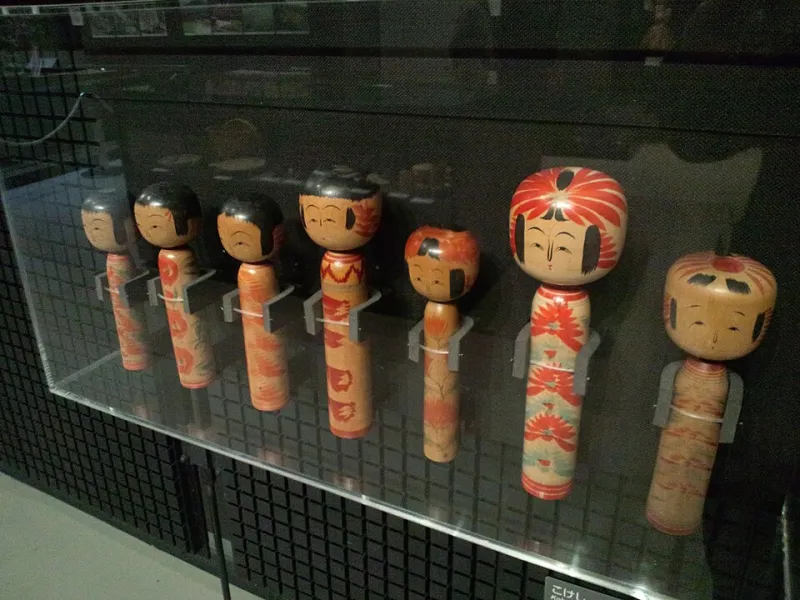
Photo: Yanajin33, CC BY-SA 4.0, via Wikimedia Commons
There's a particular kind of silence that settles over you when you're holding a half-formed kokeshi doll, a chisel in one hand and a whole lot of patience in the other. It's not the silence of boredom. It's the silence of actually being present somewhere — a feeling that's genuinely hard to come by when you're speed-running a two-week Japan itinerary.
Sendai doesn't advertise this side of itself loudly. The city is perfectly happy to let Tanabata and the beef tongue restaurants do the talking. But tucked into its neighborhoods and surrounding hillside towns is a living tradition of handcraft that's been quietly passed down for centuries — and right now, it's getting a second wind.
What Is Kokeshi, and Why Does It Matter?
If you've spent any time in Japanese souvenir shops, you've probably seen kokeshi dolls — those smooth, cylindrical wooden figures with painted faces and minimal features. They look deceptively simple, which is exactly the point. The craft originated in the Tohoku region (Sendai's backyard) during the Edo period, initially carved by woodworkers in mountain hot spring towns as affordable toys for local children.
Over time, kokeshi developed into distinct regional styles. The Naruko style, produced just an hour or so from Sendai, features a distinctive squeaking sound when you turn the head. The Tsuchiyu style, closer to Fukushima, uses bolder, more graphic patterns. Each variation tells you something about where it came from and who made it.
What's changed recently is who's making them. For decades, kokeshi carving looked like a dying art — the kind of thing kept alive by elderly craftsmen with no one lined up to take over. Then something shifted. Younger Japanese artisans, many of them in their twenties and thirties, started gravitating toward these traditions not out of obligation but out of genuine interest. Some came from design backgrounds. Others were burned out on corporate life and looking for work that felt tangible. The result is a craft scene that feels less like a museum exhibit and more like a movement.
Getting Your Hands Dirty: Workshop Options in and Around Sendai
The good news for American visitors is that Sendai's craft culture is increasingly accessible, even if you don't speak Japanese.
Naruko Onsen Kokeshi Village is the most immersive option for dedicated craft tourists. About 90 minutes from Sendai by train and bus, Naruko is essentially the spiritual home of Tohoku kokeshi. The town has multiple workshops where you can watch master craftsmen work and, at select studios, try your hand at painting a pre-turned doll. It's a full-day trip, but pairing it with a dip in one of Naruko's hot springs turns it into a genuinely restorative experience.
Closer to the city, Sendai's Aoba Ward has seen a handful of craft studios open in recent years that offer more accessible drop-in sessions. These tend to be shorter (think 60–90 minutes) and focus on painting and decorating rather than the lathe work, which takes years to master. Expect to pay around 2,000–4,000 yen for a guided session, and yes, you get to take your creation home.
For something a little different, indigo dyeing workshops have been popping up in the region with increasing frequency. Traditional Japanese indigo dyeing — known as aizome — produces that deep, moody blue you've seen on everything from old kimono fabric to contemporary fashion. A few studios near Sendai offer half-day workshops where you learn basic resist-dyeing techniques and walk away with a dyed handkerchief or small cloth. It's meditative in a way that's almost comically effective — there's something about watching white fabric transform in a dye bath that makes you forget your phone exists.
Why Young Japanese Artisans Are Choosing the Slow Lane
It would be easy to frame this craft revival as nostalgia, but that's not quite right. Talk to the younger makers around Sendai and a more complicated picture emerges. Many of them are explicitly pushing back against the pace of modern Japanese work culture — the long hours, the rigid hierarchies, the sense that productivity is its own reward. Traditional craft offers something different: a direct relationship between effort and outcome, a skill that improves visibly over time, and work that exists in the physical world rather than on a screen.
There's also a growing market driving this. Japanese consumers, particularly urban millennials, have developed a real appetite for handmade goods with documented provenance. A kokeshi doll carved by a specific artisan in a specific town carries meaning that a factory-produced souvenir simply doesn't. The same logic applies to dyed textiles, hand-thrown ceramics, and lacquerware — all of which have traditions rooted in the Tohoku region.
For American visitors, this moment is worth paying attention to. The workshops available now represent a window into something genuine rather than performed. You're not watching a demonstration staged for tourists; you're stepping into a working culture that's actively figuring out its own future.
Practical Tips Before You Go
A few things worth knowing before you book:
-
Language: Most workshop instructors near Sendai don't speak fluent English, but the hands-on nature of craft instruction means communication barriers are smaller than you'd expect. Demonstrating is universal. That said, checking whether an English-speaking guide is available — or bringing a translation app — is a smart move.
-
Timing: Craft workshops often require advance reservations, especially for smaller studios. Don't assume you can walk in. Check studio websites or contact them through Sendai's tourism office, which maintains updated listings.
-
What to wear: Indigo dye stains. Wear clothes you don't love, or ask the studio if they provide aprons (many do).
-
Combine with a day trip: Naruko Onsen makes a natural partner for a kokeshi workshop. The Zaō area, famous for its ski slopes in winter and hiking in warmer months, also has craft studios worth exploring.
The Takeaway
Sendai is a city that rewards the traveler willing to look past the obvious highlights. The Tanabata festival is spectacular, the food is genuinely world-class, and the history runs deep. But the craft studios and workshops scattered through the city and its surrounding towns offer something rarer: the chance to make something with your hands, to sit inside a tradition that's older than the country you came from, and to leave with an object that actually means something.
That's worth at least one afternoon of your trip. Probably more.