Room to Breathe: Why Sendai's Empty Spaces Are the Most Interesting Thing About It
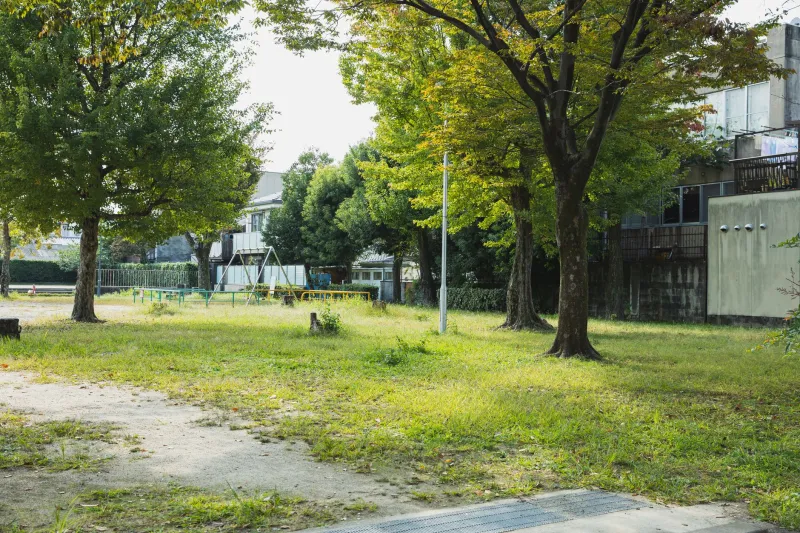
If you've ever stood in Shinjuku or Osaka at rush hour and felt like the city was trying to absorb you whole, you know what Japanese urban density feels like at full volume. Sendai doesn't do that. Walk its main streets on a Tuesday afternoon and something feels subtly, pleasantly off — like a song with more pause than you expected. It takes a minute to realize what's missing. It's the crush. The noise. The sense that every square inch has been monetized.
Sendai has a different relationship with space. And once you notice it, you can't stop noticing it.
The City That Chose Green Over Growth
Sendai's nickname — Mori no Miyako, or the City of Trees — isn't marketing language. It's a design philosophy baked into the city's bones. The broad, zelkova-lined boulevard of Jozenji-dori stretches through the heart of downtown like a park that forgot to become a road. On weekends, food trucks and jazz musicians settle into the tree canopy. On weekdays, it's just... quiet. Office workers eat lunch on benches. Nobody's rushing past anybody.
This wasn't accidental. When Sendai was rebuilt after wartime destruction in the mid-20th century, city planners made a deliberate choice to widen roads, plant trees, and resist the temptation to fill every gap. Where Tokyo zigged toward density, Sendai zagged toward what urban designers sometimes call negative space — the breathing room between things that makes the things themselves more livable.
The result is a city that feels, to American visitors especially, almost disorienting in its calm. We're used to urban cores that announce themselves loudly. Sendai's core kind of exhales.
Shrines as Pressure Valves
Then there are the shrines. Every Japanese city has them, but Sendai's feel different — more integrated, less cordoned off. Osaki Hachimangu, tucked into a hillside north of downtown, is a prime example. You climb a long stone staircase lined with cedars, and by the time you reach the top, the city noise has simply stopped. Not muffled. Stopped. The main hall, a National Treasure dating to 1607, sits in a clearing that feels genuinely ancient, even though a convenience store is maybe eight minutes away on foot.
Residents treat these spaces like neighborhood parks. Dog walkers. Kids on bikes. People who just needed somewhere to think. There's no velvet rope between the sacred and the everyday, which means the contemplative mood of shrine grounds bleeds naturally into the surrounding streets.
Yoshiko Tanaka, a Sendai native who now works in hospitality, put it simply when asked about this: "In Tokyo, you go to a shrine to escape the city. Here, the shrine is the city. It's the same feeling."
Planned Stillness in the Neighborhoods
Venture into Sendai's residential neighborhoods — Kawauchi, Aoba, the hillside streets above Hirose River — and the design logic continues. Houses are set back from roads. Gardens are actual gardens, not token shrubs wedged between concrete. The Hirose River itself cuts through the city like a green corridor, its banks given over almost entirely to walking paths, picnic spots, and the kind of nothing-in-particular that cities usually can't afford to leave alone.
For visitors from places like New York, Chicago, or LA, where every waterfront gets developed into condos and brunch spots within about fifteen minutes of becoming desirable, this restraint reads as almost philosophical. Why hasn't someone built something here? The answer, locals will tell you, is that something is here. It just isn't a building.
Hiroshi Matsumoto, who teaches urban planning at Tohoku University, frames it in terms that American city planners might recognize: "American cities talk a lot about livability now. Walkability, mixed use, third places. Sendai has been doing that intuitively for decades, not because of a trend, but because the people who rebuilt this city after the war understood that density isn't always the same as vibrancy."
What International Travelers Are Actually Looking For
Here's where things get interesting for anyone planning a Japan trip. The standard itinerary — Tokyo, Kyoto, maybe Osaka — is genuinely great. But it's also relentless. After a week of sensory maximalism, a lot of travelers hit a wall. They're tired in a way that sightseeing doesn't fix.
Sendai is quietly becoming the answer to that problem. Travel forums and social media posts from visitors in the last few years increasingly describe it the same way: I didn't expect to love it as much as I did. It just felt like I could actually be there.
That's the thing about negative space in design — it's not absence. It's invitation. A room with too much furniture makes you want to leave. A room with the right amount of furniture makes you want to sit down. Sendai is the second kind of room.
The city's tourism infrastructure is also genuinely foreigner-friendly without being performatively so. English signage is solid, the subway is intuitive, and the locals have a reputation — well-earned — for being among the most helpful in Japan. You don't feel like a problem to be managed. You feel like a guest.
The Radical Act of Doing Less
In a cultural moment when more cities are trying to out-Tokyo Tokyo — more lights, more events, more content, more stimulation — Sendai's restraint looks increasingly like a competitive advantage. The city isn't trying to overwhelm you into loving it. It's making a quieter argument: stay a little longer, slow down, and see what you notice.
What you notice, eventually, is that the silence between things is doing a lot of work. The gap between the zelkova trees on Jozenji-dori. The pause at the top of the shrine stairs. The stretch of riverbank where nothing is happening and that's entirely the point.
For a country that gave the world Marie Kondo and the concept of ma — the meaningful emptiness that gives form its shape — it makes sense that a city would eventually figure out how to build that principle into its streets. Sendai figured it out. And if you let it, it'll recalibrate something in you that you didn't know needed recalibrating.
That might be the most radical thing a city can do.