Low Volume, High Feeling: Inside Sendai's Unexpectedly Deep Jazz Culture
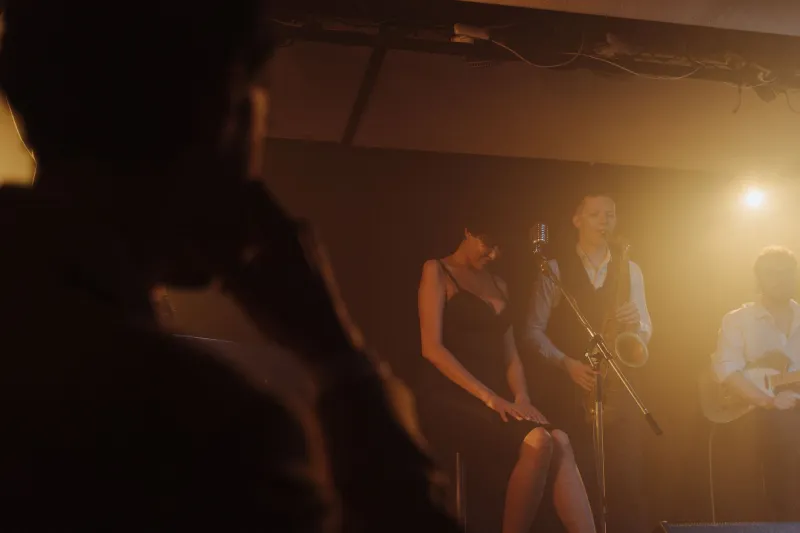
The first thing you notice is that nobody's trying to impress you.
That might sound like an odd compliment, but if you've spent any time in Tokyo's jazz bars — where the performances can feel almost performative, where the energy runs hot and the audiences sit in reverent, almost theatrical silence — Sendai's version of the same genre feels like stepping out of a loud party into someone's living room. The music is still serious. The players are still skilled. But something about the whole thing is just... looser. More human.
Sendai doesn't have a jazz festival that makes international headlines. It doesn't have a neighborhood that's been branded and marketed as a music district. What it has is a loose constellation of small clubs, basement bars, and repurposed spaces where jazz gets played the way it was probably always meant to be played — close up, for a room full of people who actually came to listen.
Why Sendai and Jazz Even Make Sense Together
Jazz arrived in Japan the way a lot of American cultural exports did — through postwar radio, through GIs, through records that traveled faster than the musicians who made them. By the 1960s and 70s, cities like Tokyo and Osaka had developed thriving scenes with dedicated venues and a growing class of serious Japanese jazz musicians.
Sendai came to it a little later and, maybe because of that, a little differently.
"Tokyo jazz has a certain ambition to it," says Kenji Oikawa, a pianist who's been playing the Sendai circuit for over fifteen years. "Everyone is trying to be the next someone. Here, we're more interested in the music itself than in what the music might lead to."
That distinction sounds subtle, but you feel it in the room. Sendai is a city that has always had a complicated relationship with the idea of being noticed. It's the largest city in the Tohoku region, but it consistently flies under the radar nationally — sometimes by design, sometimes just by temperament. The locals tend to be quietly proud rather than loudly promotional. That same instinct seems to have seeped into the jazz community.
The Clubs Worth Finding
Sendai's jazz venues are not the kind of places that show up easily on tourist maps. A few of the better-known spots are tucked into the basement floors of older buildings near Kokubuncho, the city's entertainment district. Others are found closer to the university areas, where the audience skews younger and the sets run later.
What most of them share is an almost deliberate smallness. We're talking thirty, maybe forty seats. Brick walls or bare wood. Lighting that makes everyone look like they're in a 1950s photograph. The kind of place where, if the trumpet player leans forward on a particular phrase, you can actually see the effort in their face.
One club that regulars tend to mention without quite wanting to publicize too loudly is a spot near Ichibancho that's been operating in various forms since the late 1980s. The owner, a retired music teacher named Fumiko Sasaki, books acts based on what she personally wants to hear that week. There's no social media presence. The schedule is posted on a physical board inside the door. Walk-ins are welcome, but it fills up.
"I don't want a big crowd," Fumiko says, without any apparent irony. "I want the right crowd."
What the Musicians Are Actually Playing
If you're expecting a museum of classic American jazz standards — all Coltrane and Miles Davis, preserved in amber — you might be surprised. Sendai's jazz players tend to work in a more fluid space. Standards show up, yes, but they get stretched and rearranged and sometimes barely resemble themselves by the end of a set.
There's also a noticeable thread of local influence woven through a lot of the music. Some players incorporate scales and melodic ideas drawn from traditional Tohoku folk music — a kind of regional DNA that gives their jazz a texture you won't find in a Tokyo club. It's not fusion in the showy, genre-mashing sense. It's more like the music has absorbed the landscape it grew up in.
Hiroshi Takeda, a bassist who splits his time between Sendai and occasional gigs in Sapporo, describes it this way: "Tohoku has a particular feeling — the winters, the mountains, the way people here don't say much but mean a lot. That gets into the music whether you intend it to or not."
For American listeners, especially those with some jazz literacy, this is genuinely interesting territory. It's not a Japanese imitation of American music. It's something that started as an import and became something else entirely.
The Audience Is Part of It
One of the things that makes Sendai's jazz scene feel different from what most Americans are used to — even compared to intimate venues back home — is the quality of attention in the room.
Japanese concert audiences are famously attentive, but Sendai crowds take it a step further. People come prepared. They've listened to the musicians before. They know the material. And they respond to the music in ways that are subtle but unmistakable — a slight lean forward, a quiet exhale at the end of a particularly good solo, eye contact between strangers that says did you hear that?
It creates a feedback loop between performer and audience that most musicians, once they've experienced it, find hard to give up. Several players who grew up in Sendai and spent time in bigger cities have quietly moved back, citing exactly this dynamic.
"You can play a technically perfect set in Tokyo and feel nothing," says Oikawa. "Here, someone in the third row hears one note and their whole face changes. That's why I stay."
How to Actually Experience It
If you're planning a trip to Sendai and want to find the jazz, the best strategy is to slow down and ask around. Locals who are into it tend to be generous with recommendations once they know you're genuinely curious. Hotel staff at smaller boutique properties often have better intel than any app.
Friday and Saturday nights are reliable. Weeknights can surprise you. Admission at most small clubs runs between 1,500 and 3,000 yen — roughly ten to twenty dollars — sometimes including a drink. Cash is still king at most of these spots.
Dress code is nonexistent. Come as you are. Order whatever's on the menu. And when the music starts, do what the locals do: put your phone away and just listen.
Sendai's jazz scene doesn't need you to spread the word. It's doing fine on its own terms, in its own quiet way. But if you find it, and if you let it work on you the way it's meant to, you might leave with the feeling that you heard something you can't quite explain — and that you'll be thinking about for a long time afterward.