Forget Tokyo: The Americans Who Packed Up and Planted Roots in Sendai
There's a moment that a lot of American expats in Sendai describe in almost identical terms. You've just stepped off the Shinkansen from Tokyo, hauling a bag that's slightly too heavy, and you walk out of Sendai Station into a city that's big enough to feel alive but calm enough that you can actually hear yourself think. The air smells like trees. Someone holds a door open for you. And something just… settles.
That feeling, as it turns out, is hard to shake. And more Americans than ever are chasing it on purpose.
The Tokyo Escape Hatch
For years, Japan's capital has been the default landing pad for Americans moving to Japan — whether for work, language study, or the kind of open-ended adventure that doesn't have a return ticket. Tokyo is extraordinary, no question. But it's also relentless. The rent is brutal, the crowds are constant, and the pressure to perform a very specific version of "living in Japan" can wear on you fast.
Sendai, the largest city in the Tohoku region sitting about 90 minutes north of Tokyo by bullet train, has been quietly absorbing the overflow. And it's not just people who stumbled here by accident. Increasingly, Americans are researching Sendai first — making it their deliberate destination rather than their consolation prize.
Jamie, a 34-year-old UX designer from Portland who relocated two years ago, put it plainly: "I did six months in Tokyo and I was exhausted. A friend mentioned Sendai and I thought, why not visit for a weekend? That was two years ago. I work remotely, my rent is half what it was, and I can get to the mountains in 40 minutes."
The Numbers That Actually Make Sense
Let's talk cost of living, because it matters. A decent one-bedroom apartment in a walkable Sendai neighborhood — say, around Ichibancho or near Izumi — typically runs somewhere between $600 and $900 per month. That's not a typo. Compare that to a comparable setup in Tokyo's Shibuya or Shinjuku wards, where you're looking at double or more, and the math starts doing the convincing for you.
Groceries, transit, and dining out are all meaningfully cheaper than in Tokyo, too. And Sendai punches well above its weight when it comes to what you actually get for that money: a robust public transit network, world-class medical facilities affiliated with Tohoku University, and a food scene that locals will fight you over if you dare to call it second-tier. (Seriously. Don't.)
For digital nomads especially, the equation is almost unfair. Fast, reliable internet is everywhere. Sendai has a growing cluster of co-working spaces catering to remote workers. And because the city has a massive student population — Tohoku University draws talent from across Japan and internationally — there's a built-in community of young, curious, globally minded people who don't treat foreigners like novelty items.
More Than Just Affordable
But here's the thing: the people who move to Sendai and stay aren't just here because it's cheap. They stay because the city fits.
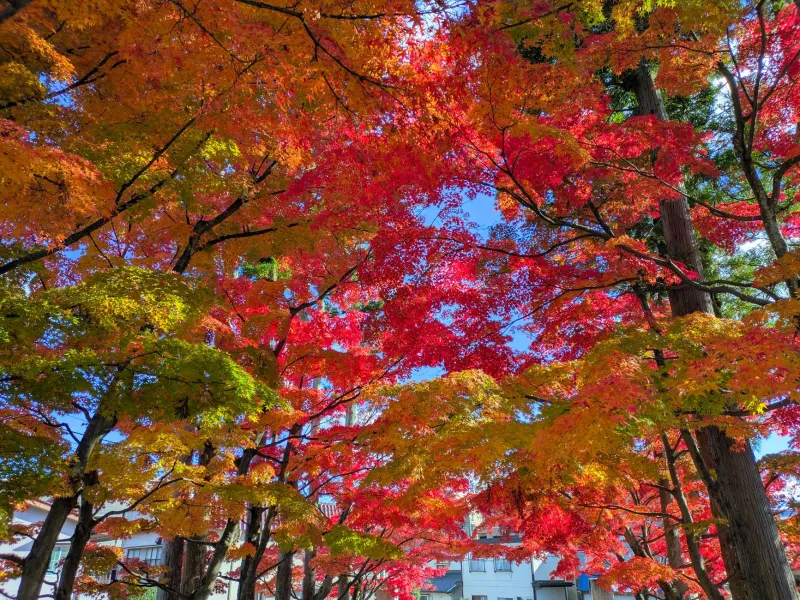
Sendai has a nickname — "the City of Trees" — and it earns it. The main boulevard, Jozenji-dori, is lined with a canopy of zelkova trees that turns gold and copper every autumn in a way that genuinely stops people in their tracks. Temples and shrines are woven into residential neighborhoods rather than cordoned off as tourist attractions. The Hirose River cuts through the city and gives it a breathing room that urban planners in American cities would kill for.
Meredith, a 29-year-old English teacher from Nashville who arrived on the JET Program and quietly never left, describes it as "the Japan I actually wanted, not the Japan I thought I wanted." She elaborates: "When I imagined Japan, I pictured neon signs and bullet trains and ramen at 2 a.m. And yeah, you can have that here. But you can also have a Saturday morning where you walk to a farmers' market, buy persimmons from an 80-year-old woman, and then spend an hour in a temple garden watching koi. Both things exist in the same city."
Getting In, Getting Connected
One of the trickier parts of expat life anywhere in Japan is integration — the genuine kind, not just the tourist-surface version. Sendai has some structural advantages here. The city actively courts international residents through programs like the Sendai International Relations Association, which runs language exchange events, cultural workshops, and orientation support for newcomers. It's not perfect, and Japan's bureaucratic systems can still feel impenetrable, but the infrastructure for connection exists if you're willing to show up.
Local izakayas — those casual Japanese pub-restaurants that are basically the social glue of neighborhood life — are often more welcoming in Sendai than in cities where foreigners are either too common to be interesting or too rare to be comfortable. Several American expats mentioned that their best friendships in Japan started at a bar counter, communicating through a mix of broken Japanese, enthusiastic gestures, and shared plates of grilled beef tongue.
The beef tongue thing, by the way, is real. Sendai is famous for it. You'll get used to it fast, and then you'll start craving it.
The Tohoku Factor
There's something else that Americans who land in Sendai often mention, something harder to quantify. Tohoku — the broader northeastern region that Sendai anchors — carries a particular weight and resilience. The 2011 earthquake and tsunami reshaped this region in devastating ways, and the recovery has been long and ongoing. But it's also produced a community ethos that visitors feel immediately: a groundedness, a warmth, a sense that people here have been through something real together and came out the other side still choosing to show up for each other.
For Americans who are themselves grappling with questions about community, belonging, and what it means to live somewhere that actually gives a damn — that ethos resonates.
Daniel, a 41-year-old former marketing director from Chicago who relocated with his family three years ago, says it best: "My kids go to a local school. My neighbors bring us food on holidays. When my wife got sick last year, three different families checked in on us. I don't know if I'd have that in Chicago. I know I have it here."
So, Is Sendai Right for You?
That depends entirely on what you're looking for. If you need the electric buzz of a true megalopolis, Sendai might feel like it's missing something. But if you want a city that's genuinely livable — one where you can build a real life, eat extraordinarily well, access nature without a weekend expedition, and feel like a resident rather than a permanent tourist — Sendai has a compelling case.
The Shinkansen to Tokyo runs constantly if you need a city fix. But a lot of people who come up here for a weekend find themselves, a year later, quietly renewing their lease and wondering why they waited so long.