From Faded Neon to Full Bloom: How Kokubuncho Became Sendai's Creative Heartbeat
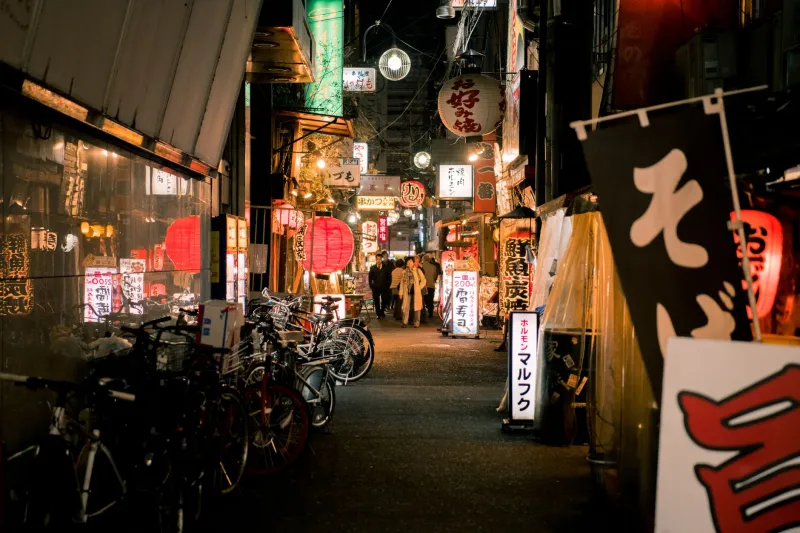
There's a moment, if you wander into Kokubuncho on a Thursday evening, when the neighborhood hits you all at once. A hand-lettered sign in a second-floor window. The smell of fermenting grain drifting out of a side alley. A cluster of people arguing loudly and happily over something on a wall — a painting, maybe, or a zine spread across a folding table. It feels alive in a way that's hard to manufacture and impossible to fake.
This is Sendai's creative district. And not so long ago, it was none of those things.
What Kokubuncho Used to Be
For most of the 20th century, Kokubuncho was Sendai's entertainment quarter — the kind of place that every mid-sized Japanese city has, full of izakayas, karaoke joints, hostess bars, and the particular fluorescent glow of businesses that peak between 10 p.m. and 2 a.m. It had energy, sure, but it was the kind of energy that belongs to a specific era. When that era started winding down — when younger generations stopped showing up, when foot traffic thinned, when storefronts went dark — Kokubuncho faced the same slow bleed that guttered entertainment districts across Japan.
The 2011 earthquake and tsunami that devastated the broader Tohoku region didn't help. Sendai itself survived with less structural damage than coastal communities, but the psychological and economic toll rippled through every part of the city. For a while, Kokubuncho felt like a neighborhood holding its breath.
Then the creatives showed up.
Why They Came Here Instead of Tokyo
Ask almost anyone who built something in Kokubuncho over the last decade why they didn't just go to Tokyo, and you get some version of the same answer: Tokyo is expensive, crowded, and already full. Sendai was affordable, had space, and was genuinely hungry for something new.
Take the logic of a ceramicist who relocated from Osaka to open a studio on one of Kokubuncho's quieter side streets. Rent for a space that would have cost a fortune in a major metropolitan hub runs a fraction of that here. More importantly, the community was welcoming in a way that felt different — less competitive, more collaborative. People were rooting for each other to succeed because the whole project of making Kokubuncho interesting depended on collective momentum.
That collaborative instinct turned out to be the neighborhood's secret weapon. Galleries started sharing mailing lists. A craft brewery that opened in a converted storage building became an informal community center, hosting pop-up markets and artist talks on weekends. A boutique selling locally designed clothing partnered with a nearby print studio to produce limited-edition runs. None of it was coordinated by a city agency or managed by a real estate developer. It just grew, organically, because the people who moved here actually wanted to know their neighbors.
The Spaces Doing the Heavy Lifting
Walk Kokubuncho's main drag and the side streets fanning off it, and a few places stand out as anchors of the new creative ecosystem.
Independent galleries have multiplied here, showing work by local artists alongside names from across Japan and occasionally from abroad. The programming tends to be unpretentious — opening nights that feel more like house parties than formal events, prices that don't require a second mortgage. The message is pretty clear: art isn't just for people who already know what they're doing.
Craft breweries have also become a defining feature of the district. Sendai has a strong craft beer culture generally, but the breweries that have set up inside Kokubuncho lean into the neighborhood's identity — their taprooms double as event spaces, their labels feature local artists' work, and their seasonal releases often tie into Sendai's broader festival calendar. You can walk in for a pint and end up deep in conversation about urban planning or regional history. It happens regularly.
Artist studios — some open to the public, some tucked away and only findable if you know who to ask — add another layer. The density of working artists in the neighborhood has created the kind of cross-pollination that's hard to engineer deliberately. A textile artist influences a furniture maker down the block. A printmaker collaborates with a chef on a dinner event. The boundaries between disciplines feel genuinely porous here.
What Makes It a Model Worth Paying Attention To
Urban renewal is a phrase that gets thrown around a lot, usually by city planners and developers who have a very specific kind of renewal in mind — one that ends with higher rents and displaced residents. What's happened in Kokubuncho is different, and it's worth understanding why.
The people who rebuilt this neighborhood did it on their own terms and at their own pace. They didn't wait for outside investment to validate the project. They moved in when things were cheap and uncertain, and they built community before they built buzz. The neighborhood's identity emerged from the ground up, shaped by the specific people who chose to be there — not by a branding exercise.
Sendai's city government has been supportive without being overbearing, which is genuinely rarer than it sounds. There are grant programs for small creative businesses, some infrastructure investment, and a general posture of getting out of the way and letting the neighborhood develop its own character. That restraint has paid off. Kokubuncho feels authentic because it is authentic.
For anyone watching from the US, where the cycle of cool-neighborhood-to-overpriced-neighborhood plays out with depressing regularity in cities from Brooklyn to East Nashville, Kokubuncho offers an interesting counterpoint. It's not a finished product. It's still in process. But the process itself — community-driven, affordable, genuinely weird in the best possible way — is the whole point.
How to Experience It If You're Visiting
Kokubuncho is walkable and central, which makes it easy to fold into any Sendai itinerary. The neighborhood comes alive in the evenings, but weekend afternoons are great for gallery browsing and studio visits. Look for handwritten event listings in shop windows — they'll tip you off to pop-up markets, live music, and art openings that don't always make it onto official tourism sites.
If you want to go deeper, ask. People here tend to be genuinely happy to talk about what they're building and why. That openness is part of what makes the neighborhood tick. Kokubuncho didn't become Sendai's creative heartbeat because someone decided it should be. It got there because a lot of people showed up and started making things — and then stayed.